
A MEMORABLE 6 NIGHT AT BHUTAN

Please note:- Rates are subject to change in their tentative rate.
DAY 1:
Arrive Paro – Thimphu (Approx. 65 kms/ 2 hours)
- Arrive at Paro International Airport. After arrival, proceed to the immigration counter. Complete Immigration formalities and you will be met with your chauffeur/ guide at the outside of the airport terminal.
- You will be transferred to Thimphu.
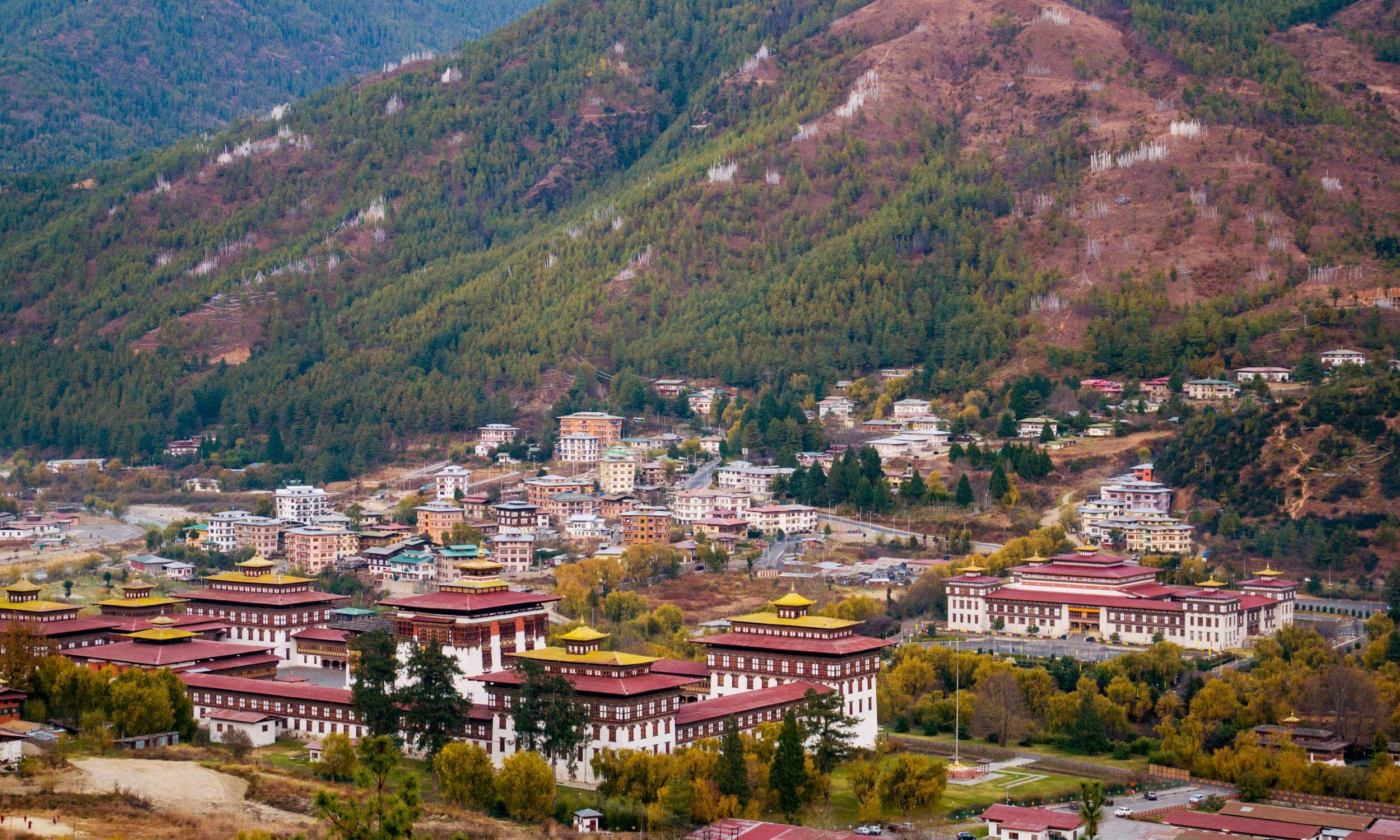
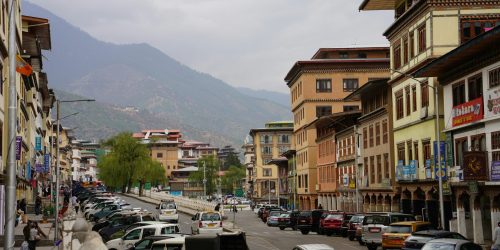
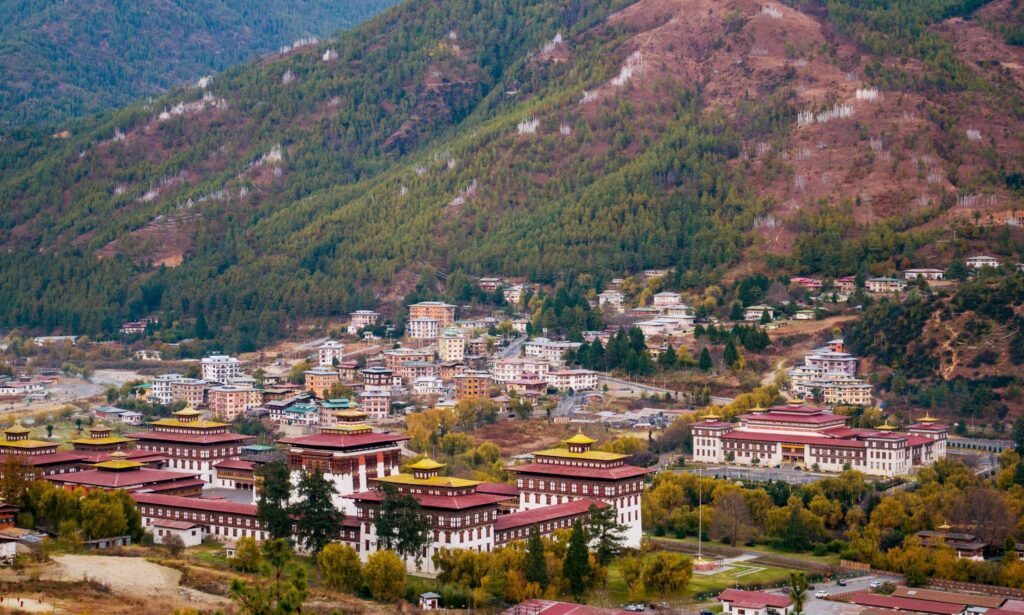
- Thimphu – is the capital and the largest city of the Kingdom of Bhutan. Thimphu is the political and economic hub of Bhutan. The city is located on the bank of River Wang Chuu. Thimphu contains most of the important political buildings in Bhutan, including the National Assembly of the newly formed parliamentary democracy and the residence of the King. Thimphu holds a fascinating four-day festival, held every year during autumn (September/ October).
- Arrive at Thimphu. Check-in to your hotel.
- Later proceed for a short sightseeing of Thimphu. (Sightseeing on this day won’t be possible if the flight arrival time is beyond 2 pm)
- Memorial Chorten – On the western side of Thimphu’s Memorial Chorten, a row of wooden platforms sits in the long grass. Each has been polished smooth by the prostrations of faithful worshippers who gather here in sun, rain or snow, to pay their respects to His Majesty Jigme Dorji Wangchuck (1928–1972), the Third King of Bhutan. The Chorten, with its elaborate golden peak representing the crescent moon and sun, is one of Thimphu’s most striking religious landmarks. Constructed in 1974, the Tibetan-style chorten’s whitewashed exterior boasts richly decorated chapels – one facing each of the cardinal directions.
- Overnight stay in Thimphu.
DAY 2:
Thimphu
- Kuensel Phodrang: Visit the site of the giant Buddha statue, set to contain 125,000 smaller Buddha statues.
- Takin Reserve: See Bhutan’s national animal in the former zoo, now a sanctuary.
- Anim Dratshang (Nunnery): Explore the nunnery with beautiful views of Tashichho Dzong.
- Folk Heritage Museum: Discover traditional Bhutanese family life in a 19th-century home.
- Royal Textile Academy: Learn about Bhutan’s rich hand-weaving traditions.
- Handicrafts Market: Shop for local goods and handicrafts.
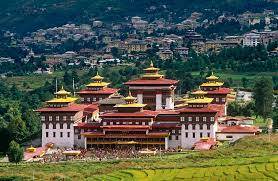
- Tashichho Dzong: Visit the impressive fortress, home to the king’s offices and ministries.
Overnight stay in Thimphu. Meals: Breakfast.
DAY 3:
Thimphu – Punakha (Approx.120 kms/ 4 hours with en-route stop)
Breakfast at the hotel. After breakfast, visit Punakha.
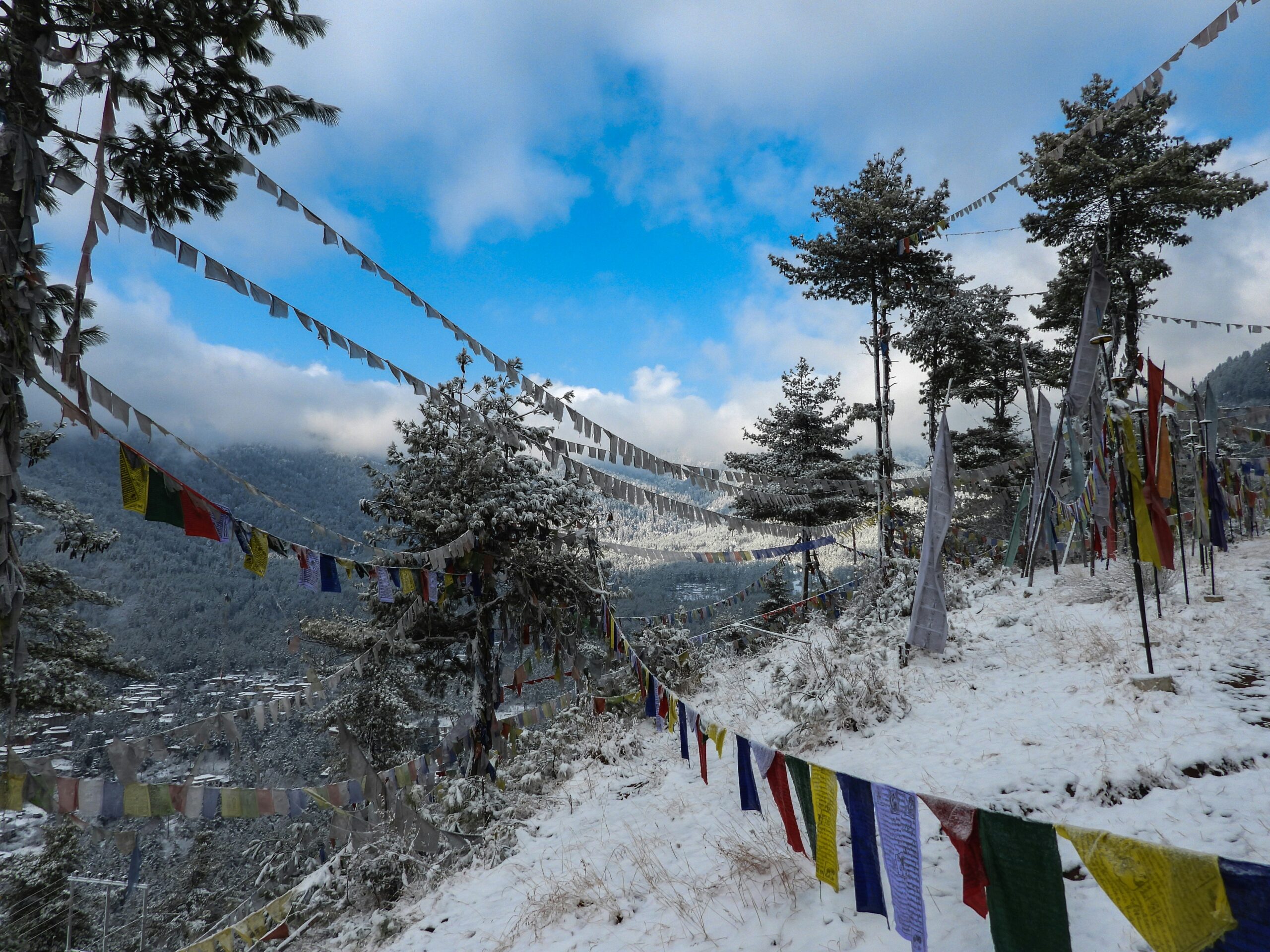
En-route visit Dochu La – A mountain pass leading further into the Punakha Valley. It offers a stunning 360 degree panoramic view of Eastern Himalayan mountain ranges. The view is especially scenic on clear, winter days with snowcapped mountains forming a majestic backdrop to the tranquility of the 108 chortens gracing the mountain pass. Enjoy lunch at newly open restaurant Druk Wangyel Cafe and visit Punakha Dzong and Chimi Lakhang on your way to Punakha.
Arrive at Punakha and check-in to the hotel.
Stay: Punakha
DAY 4:
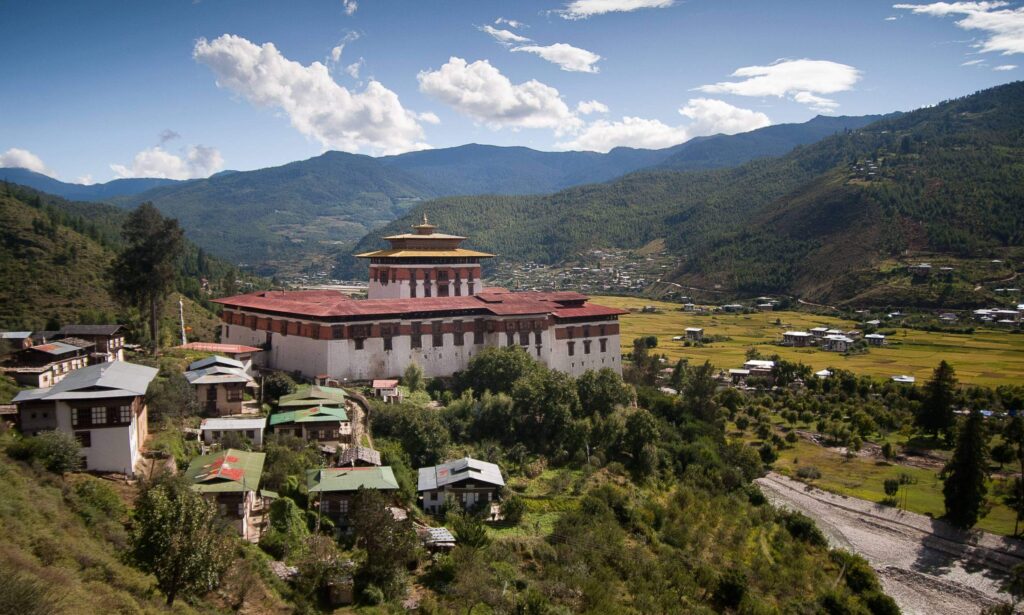
Punakha
- ChimiLha Khang – Built in 1499, ChimiLhakhang is dedicated to the “Divine Madman,” DrukpaKunley, a sage revered in Bhutan for his unorthodox teachings and his use of a “flaming thunderbolt” to fight evil. While ChimiLhakhang marks the spot where DrukpaKunley defeated and buried a much-feared demoness, today the hilltop lhakhang is visited by expectant mothers and families with newborns to pray for their children’s health. Kindly note that a walking of good 45 minutes has to be undertaken.
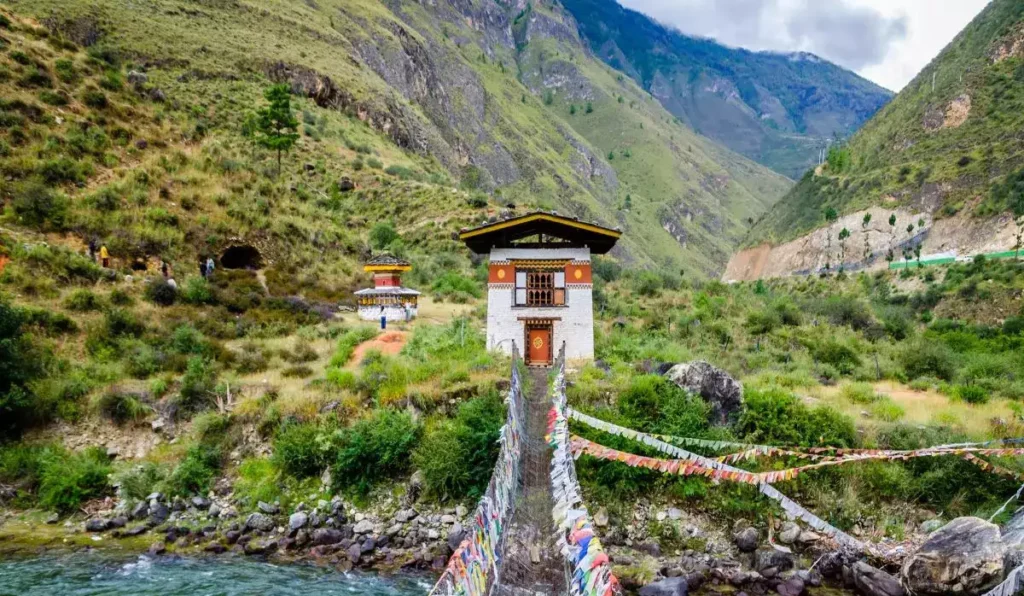
- Suspension Bridge – Behind Punakha Dzong stretches the Punakha Suspension Bridge, the longest of its kind in Bhutan. The bridge connects the dzong with the villages on the other bank of the Po Chhuriver — Shengana, Samdingkha, and Wangkha — where traces of the Divine Madman DrukpaKuenley can still be found, in the form of local stories, monasteries and markings on rocks.
- Punakha Dzong – Visitors approach the dzong over a long cantilever bridge that spans the Mo Chhu and up a steep flight of wooden steps. The first dochey or courtyard houses Punakha dzongkhag’s government offices, with darkened passages leading south around the six-story utse to the monastic quarters that line the second courtyard. The utse contains Bhutan’s holiest relic, an image of Chenrezig (the bodhisattva of compassion) that the Zhabdrung brought to Bhutan from Tibet — although this is not on public display.
- Return back to the hotel.
- Stay: Punakha
DAY 5:
Punakha – Paro
- Breakfast at the hotel. After breakfast, you will be transferred to Paro. Arrive Paro by the afternoon and proceed for a brief sightseeing of Paro.
- Paro – The valley extends from the confluence of the Paro Chhu and the Wang Chhu rivers at Chuzomupto Mt. Jomolhari at the Tibetan border to the North. This picturesque region is one of the widest valleys in the kingdom and is covered in fertile rice fields and has a beautiful, crystalline river meandering down the valley.
- DrukgyelDzong – The smoke-smudged walls of DrukgyelDzong’s four-story utse (central tower) still stand intact among the surrounding ruins. Located at the head of the Paro Valley, the once-magnificent DrukgyelDzong was built in 1649 and stood along a major route into Tibet for three centuries until it burned to the ground in a 1951 fire. The dzong’s name, which translates as “Bhutan’s Victory,” commemorates a 1644 defeat of Tibetan forces in this region. Today, a narrow path spirals up towards the dzong past the collapsed remains of a walled passage that once secured the dzong’s water supply. Go through the gate to access a flagstoned courtyard once used for festivals. Beyond this lies the main body of the dzong, where wild strawberries and herbs sprout among the rubble.
- KyichuLakhang – When it was divined that she was preventing the spread of Buddhism, the great seventh-century Tibetan king SongtsenGampo pinned her in place with 108 magically constructed temples — allowing Buddhism to flourish above her restrained body. One of Bhutan’s two ancient demoness-pinning temples, Paro’sKyichuLhakhang is believed to hold the demoness’s left foot in place. With its tiered roof and luminous white walls, the lhakhang’s age is not immediately apparent. It is only inside the monastery’s ancient heart, the JowoLhakhang, that the sanctuary’s long history is palpable. Golden murals shine faintly from smoke-darkened walls, and the floor has been polished smooth by the feet of countless faithful practitioners. The holiest part of the chapel surrounds the revered seventh-century statue of JowoSakyamuni, visible through a gilded door.
- Ta Dzong – National Musuem of Bhutan
- Stay: Paro
DAY 6:
Paro
- Breakfast at the hotel. After breakfast, visit Paro.
- Tiger Nest – From a distance, Bhutan’s most iconic building seems to float, weightless, halfway up a sheer cliff-face, 900 meters (3,000 feet) above the floor of the Paro Valley. As you wind your way breathlessly up the long, steep path towards TaktsangLhakhang, the monastery periodically reveals itself, rising out of the forest, closer and more solid with each re-appearance.
- OR
- Chele La Pass – the highest point on Bhutan’s Dantak roads, crests at 3988 meters (roughly 13,000 feet) above sea level. The bright yellow sign marking its location stands next to a traditional stone fireplace and stove, a Buddhist prayer wheel marked with a quote advocating kindness, and a small hut and seating area.
- Return back to the hotel.
- Stay: Paro
Depart from Paro
- Breakfast at the hotel.
*for early flights, there will be no breakfast - After breakfast, transfer to the airport to board your flight back to home.
INCLUSIONS
- Room Category: lead-in room category in each of the hotels.
- Meal plan on MAP basis (daily breakfast & dinner are included in the hotel).
- Shared transportation as per the number of guest.
- An exclusive guide service in Bhutan.
- Applicable monument entrance fees. Presently applicable Government Service Tax.